02.06.2026
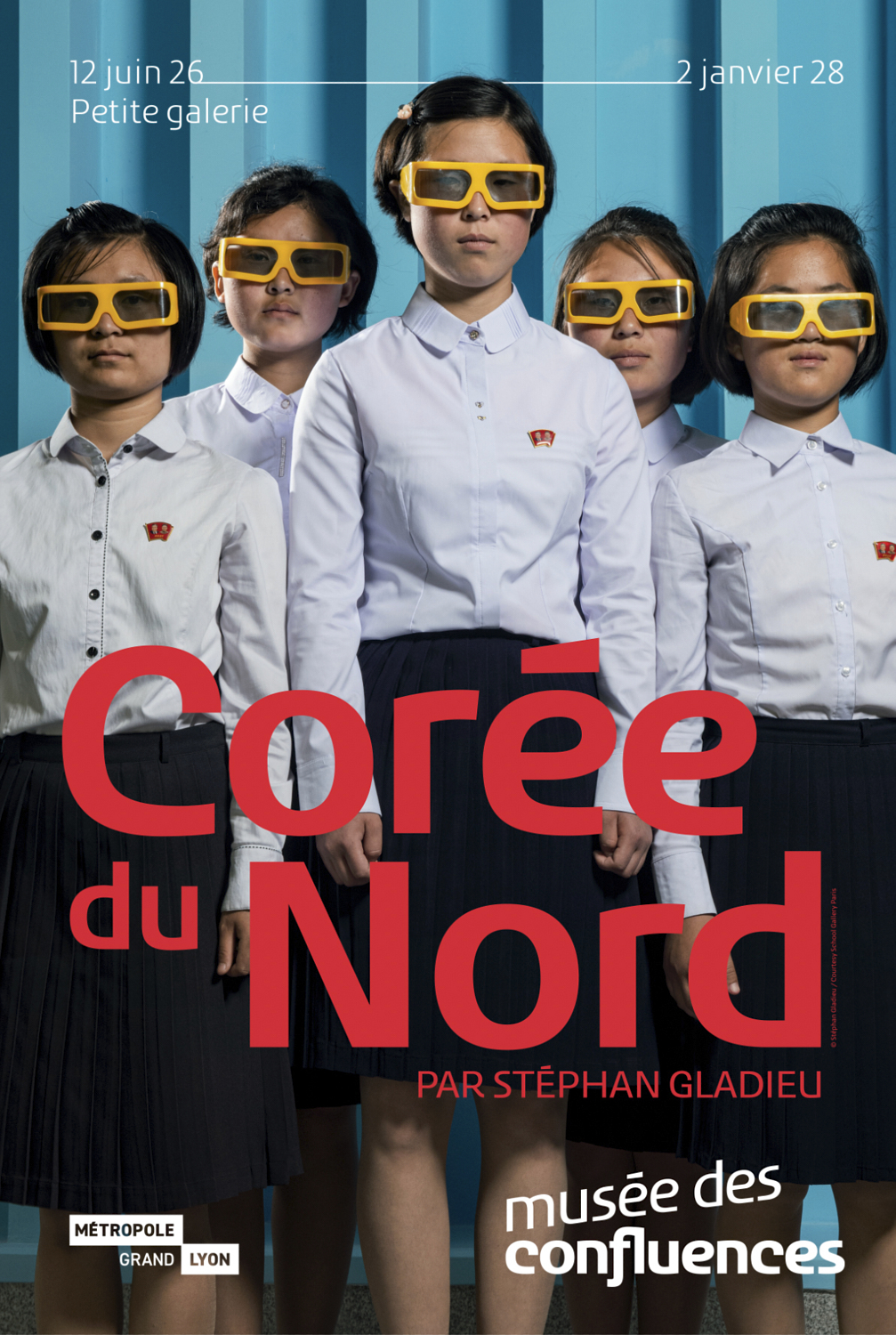
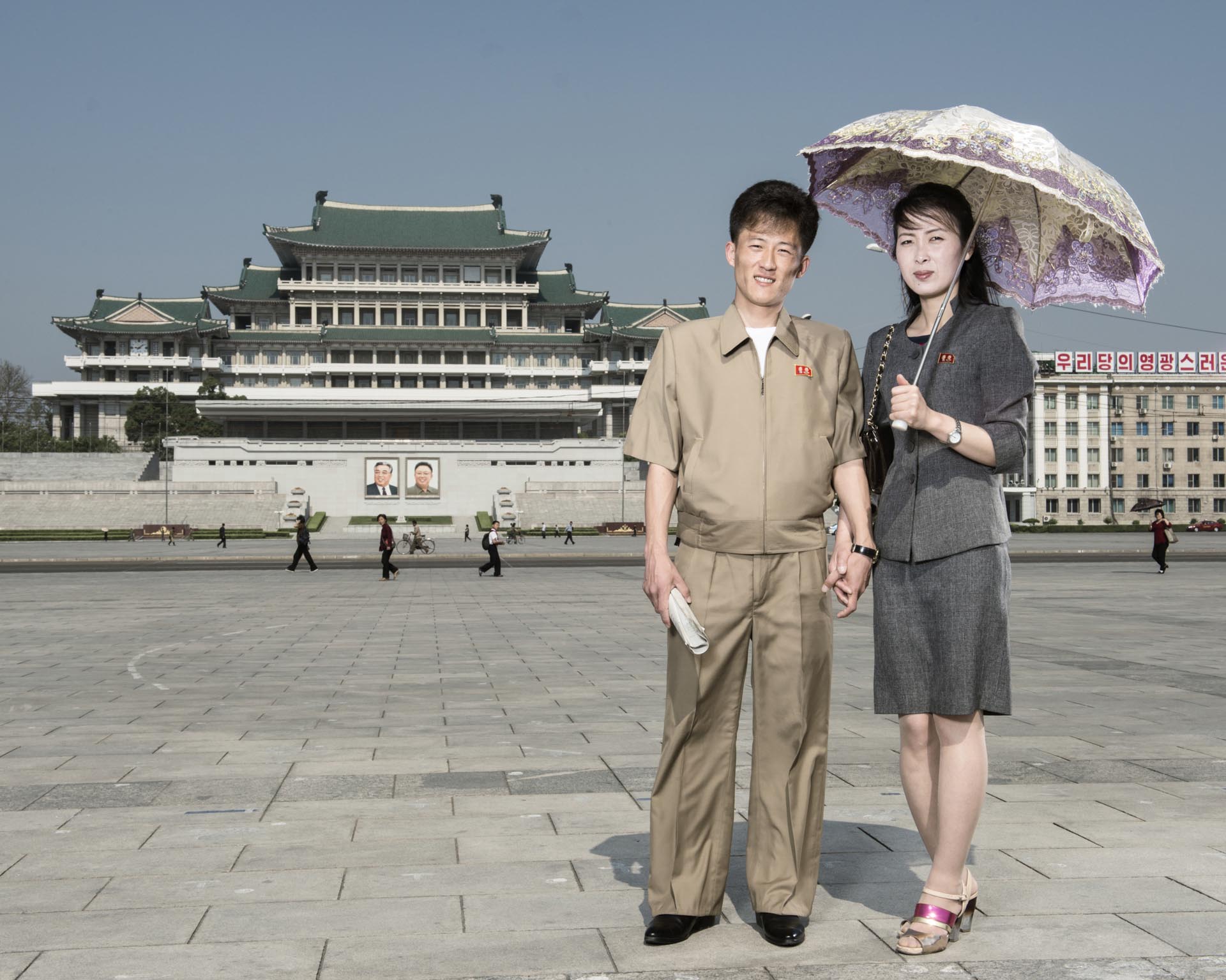
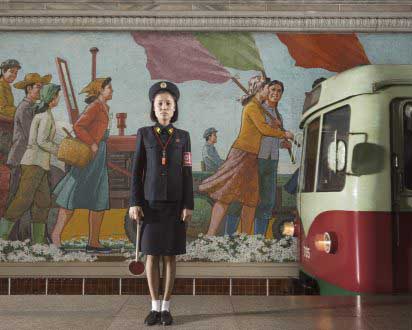
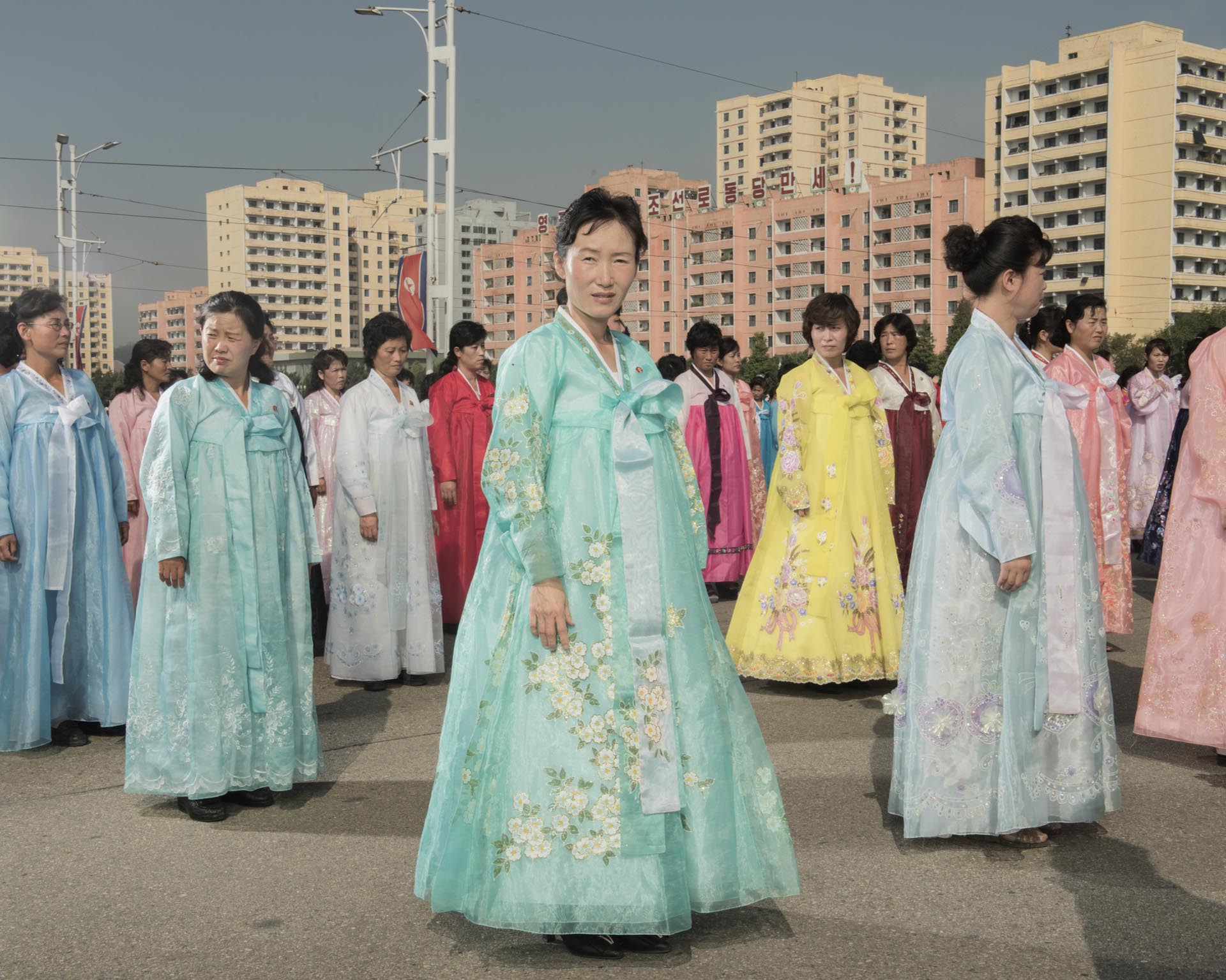
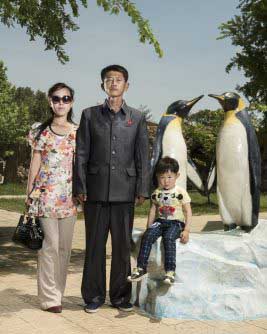
La série Corée du Nord est construite sur la répétition du 1, l'individu n'étant qu'une composante indissociable de la réalité collective. Ma démarche fait écho au régime dynastique et dictatorial qui, dans un contexte de tension permanente, a fait le choix d'un collectivisme qui rend son peuple invisible. Encadré et accompagné pas à pas tout au long de mes séjours en Corée du Nord, j'ai inventé un espace de liberté dans le cadre qui m'était imposé.
Pour capter l'identité de ce peuple et saisir le hors-champ de la doctrine officielle, j'ai choisi le portrait, souvent en pied, invitant à la pose frontale et au regard direct. En abordant ainsi les codes de l'image de propagande, j'ai rendu ma démarche, sinon familière, du moins compréhensible par les Nord-Coréens. Un pari dans un pays où l'individu n'existe pas et où le singulier n'a pas de réalité dans cette société où tout est pluriel, collectif et communautaire.
The North Korea series is built on the repetition of 1, the individual being only an inseparable component of the collective reality. My approach echoes the dynastic and dictatorial regime that, in a context of permanent tension, has chosen collectivism that makes its people invisible. Framed and accompanied step by step throughout my stays in North Korea, I invented a space of freedom within the framework imposed on me.
To capture the identity of this people and capture the off-screen of the official doctrine, I chose the portrait, often full-length, inviting frontal posing and direct gaze. By approaching the codes of propaganda image in this way, I made my approach, if not familiar, at least understandable by North Koreans. A gamble in a country where the individual does not exist and where the singular has no reality in this society where everything is plural, collective and communal.
05.11.2025
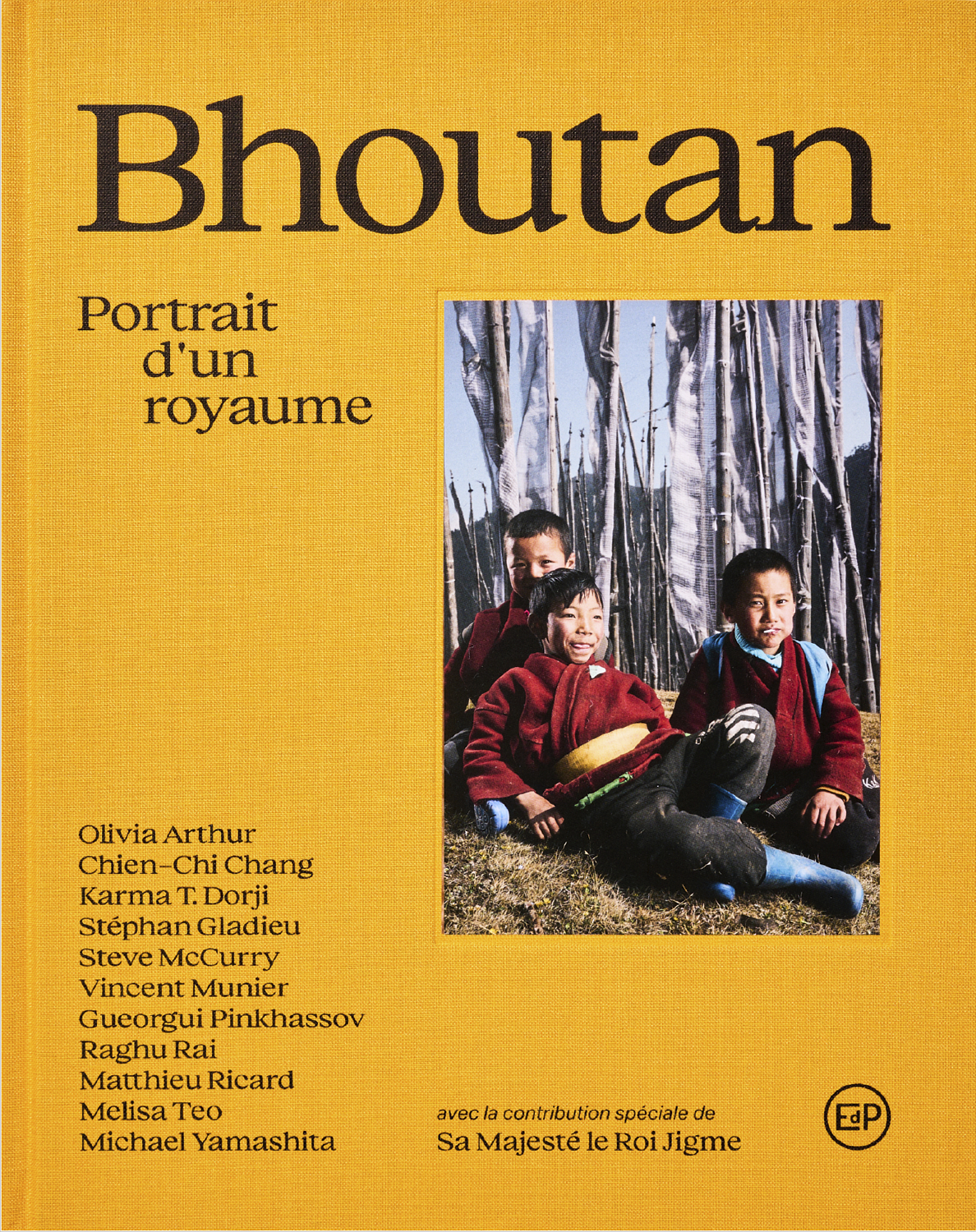
Cet ouvrage collective est réalisé sous le patronage de la reine du Bhutan Jetsun Pema Wangchuck. La reine a choisi dix photographes internationaux qui se sont succédé un par mois pendant un an pour capturer l'âme du Bhutan. Le livre est publié par les édition du Pacifique.L'ouvrage réunit les travaux de photographes de renommée mondiale comme entre autre Steve McCurry, Vincent Munier, Michael Yamashita et Raghu Rai.
This anthology was produced under the patronage of Queen Jetsun Pema Wangchuck of Bhutan. The queen selected ten international photographers who took turns—one each month for a year—to capture the soul of Bhutan. The book is published by Éditions du Pacifique. It brings together the work of world-renowned photographers such as Steve McCurry, Vincent Munier, Michael Yamashita, and Raghu Rai, among others.
02.04.2025
Nous sommes plus que jamais traversés par la question de l’identité ; plus précisément, par celle du rapport entre l’identité personnelle et l’identité collective.
L’identification à un groupe d’appartenance a longtemps été le ciment matriciel des nations, des sociétés où, à plusieurs, parce qu’ils adhéraient à un corpus de valeurs et un référentiel culturel communs, les citoyens se reconnaissaient sous une bannière identitaire, le moyen de vivre en paix, ensemble, portés par un avenir commun.
Sous l’effet des ubiquités offertes en temps réel par les technologies, des vitrines égotiques offertes par la désintermédiation des réseaux sociaux, de la circulation libre au-delà des frontières terrestres et du monde tangible, le besoin d’affirmer la singularité de l’être a pris le pas sur celui de se fondre dans un ensemble.
D’élection en manifestation, de conflit en repli, face à l’inconnu et l’imprévisible, ce qui nourrissait autrefois le commun n’agglomère plus vraiment. On se construit désormais en opposition, par soustraction ou rejet de ce qui n’est pas soi. Le plus petit dénominateur commun a cédé la place au plus grand diviseur des intérêts particuliers, altérant la convergence dans l’intérêt général.
« Dans la nature rien n’existe seul » écrivait Rachel Carson. Pourtant, aujourd’hui, les identités collectives nationales sont fragmentées en sous-groupes d’appartenance, eux-mêmes subdivisés en communautés micro-identitaires lesquelles résonnent par-delà les frontières. Comment se construisent aujourd’hui les identités collectives ?
De cette question est née l’idée d’une trilogie. Déclinée en séquences de portraits réalisés dans l’unité de lieu d’un pays, elle interroge le rapport entre le groupe et l’individu, l’appartenance et l’apparence. Elle cherche à décrypter ce qui reste de la standardisation des idéaux collectifs supposés « faire société » face au désir universel d’exister individuellement dans son caractère propre, à la fois unique et multiple.
Ce que l’on donne à voir aux autres, cette peau sociale, est-elle notre identité profonde ou un masque ? J’explore le rapport entre les signes d'appartenance à un groupe et les singularités ostentatoires de chacun. Je place chaque individu sur le même plan, à la même distance de l’objectif, composant une mosaïque d’ensemble qui révèle une convergence de différences.
« Nord-Coréens », le premier volet de cette trilogie, est construit sur la répétition du « un ». Comme dans une peinture pointilliste, chaque individu se révèle dans un tableau d’ensemble, il n’est que l’un des composant de la réalité collective. Dans l’unité de lieu Corée du Nord, ma démarche photographique emprunte volontairement les codes de la propagande. En écho au régime dynastique et dictatorial qui a fait le choix d’un collectivisme invisibilisant l’individu autant que le peuple au profit de l’identité collective dogmatique, j’en ai fait la verticale de lecture de ce projet.
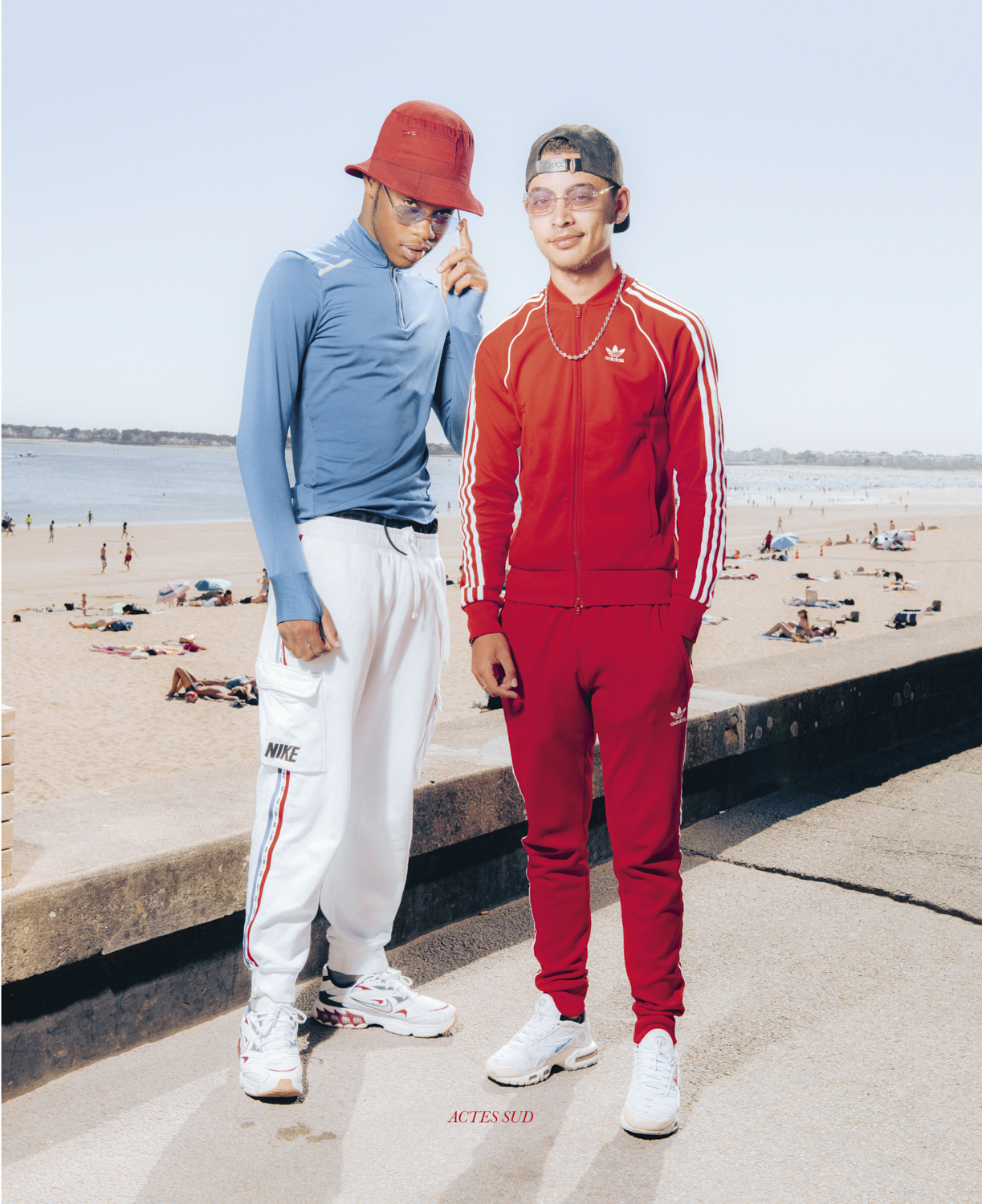
Cet ouvrage offre à voir le second volet dédié à l’identité française par le prisme des vacances qui sont, à mes yeux, un révélateur de l’attachement farouche au modèle social français fondé sur une solidarité collective dont nous ne cessons, néanmoins de contester les limites ; les uns la trouvant trop couteuse, les autres, pas assez généreuse. Ainsi, la société française offre le paradoxe d’une identité mixte, laissant émerger un fort individualisme dans un ensemble fondamentalement régi par les standards d’un système de protection sociale collective.
À cet égard, la sociologie de la plage est un révélateur unique de la société française, multi générationnelle, culturelle, ethnique et sociale. Tous les français s’y retrouvent, mis à nu dans une égalité aussi éphémère qu’illusoire, réunis par le désir de farniente dans un espace-temps convivial. Le bord de mer donne à voir une matrice composite où malgré toutes les différences, les bonheurs singuliers s’expriment à l’unisson, chacun seul au milieu des autres.
Deux étés durant, en 2022 et 2023, accompagnés de mes merveilleux assistants, nous avons sillonné les côtes françaises, de la frontière belge à la frontière espagnole, puis après avoir longé les Pyrénées, de la frontière espagnole à la frontière italienne. Onze mille kilomètres en camionnette, cinquante-cinq stations balnéaires pour un voyage hors norme. Partout, nous avons été accueillis chaleureusement, par des familles, des couples, des bandes d’amis, des gens seuls… tous en vacances sur le littoral. Oui, ce fut une surprise, une bonne, je ne m’y attendais pas, on dit si souvent que les Français sont râleurs…
Ce qui m’a le plus touché dans ce voyage à la rencontre de mes compatriotes, c’est la générosité de celles et ceux qui m’ont donné à voir un peu de leur monde intérieur. Et le témoignage de leur gratitude. Remerciements de les avoir regardés, de les avoir choisis, de les avoir mis en lumière. Mais vous êtes si émouvants, généreux, inattendus, vibrants, tout simplement beaux et surtout, tellement heureux.
Je me retrouve dans les mots de Leïla Slimani lorsqu’elle évoque une solitude dans la création qui n’est en aucun cas de la misanthropie. Car effectivement, nous aimons les autres. Nous cherchons à « saisir le tremblement en chaque être ».
Si le portrait me demande de m’approcher de mes sujets, il est vital pour moi d’entretenir la solitude intérieure qui me permet de me focaliser uniquement sur ce que mes yeux perçoivent. Je regarde, je prends un temps conséquent à observer pour tenter de comprendre qui me fait face et jusqu’où je peux avancer pour initier la connexion juste.
J’ai conservé le même procédé sur l’ensemble de cette trilogie. Une unité de lieu (ici, la France), une verticale (la plage) et la mise en relief des personnages sur un arrière-plan qui ajoute une dimension à l’image. Dans mon protocole de travail, le territoire est l’élément primaire. Lorsque j’arrive à destination, je repère, je cherche des fonds de décor. L’arrière-plan est essentiel : il place mes sujets en accord avec un cadre qui permet à la fois le surgissement de l’imprévisible et le fantasme de l’hors-champ. Choisis avec soin, les décors accueilleront celles et ceux que j’aurai rencontrés fortuitement et choisis subjectivement en fonction de ce qu’ils provoquent en moi. L’individu est au centre de mon travail.
J’ai fait le choix du portrait en pied, la pose est frontale et le regard direct. Le cadre varie peu, la lumière reste constante, la distance au sujet de plain-pied est souvent identique. Ce cadre de référence tend à sacraliser mes sujets. Je ne dirige pas mes modèles, j’avance à la manière du cinéaste Robert Bresson qui écrivait : « Je vous invente comme vous êtes. » Des héros du quotidien.
En miroir de l’icône religieuse, qui offre une représentation symbolique du monde sans prétendre représenter le réel, je travaille à une représentation iconique de l’individu transcendé par la lumière artificielle de mon studio en plein air. L’incidence des flashs sur le personnage au premier plan, dans un contexte baigné de lumière naturelle, donne une touche surnaturelle à l’image. C’est tout le sens de ma démarche : donner aux gens ordinaires, à travers leur représentation symbolique et iconique, une place littéralement extraordinaire ; celle réservée autrefois, dans toute l’histoire de l’art, aux divinités et aux dominants.
J’ai une tendresse immense pour les personnes qui acceptent d’entrer dans mon procédé créatif, leur générosité me touche et me surprend à chaque fois. Cette capacité à sortir de soi pour se mettre en scène, exposer son archétype propre, nous l’avons tous en nous, qui plus est en vacances, encore faut-il surmonter sa timidité ou sa pudeur. Je souhaite, ici, les remercier tous du fond du cœur à nouveau.
We are more than ever confronted with the question of identity; more precisely, with the relationship between personal identity and collective identity.
Identification with a group has long been the foundational cement of nations, of societies in which people, because they shared a common set of values and a common cultural frame of reference, could recognize themselves under a shared identity banner—the means of living together peacefully, carried by a common future.
Under the influence of the ubiquity offered in real time by technology, the egotistical showcases enabled by the disintermediation of social networks, and the free movement beyond terrestrial borders and the tangible world, the need to assert the singularity of the individual has taken precedence over the desire to blend into a larger whole.
From elections to demonstrations, from conflict to withdrawal, faced with the unknown and the unpredictable, what once nourished the common no longer truly brings us together. We now construct ourselves in opposition, through subtraction or rejection of what is not ourselves. The lowest common denominator has given way to the greatest divider of individual interests, weakening convergence in the pursuit of the common good.
“In nature, nothing exists alone,” wrote Rachel Carson. Yet today, national collective identities are fragmented into groups of belonging, themselves subdivided into micro-identity communities that resonate across borders. How are collective identities constructed today?
This question gave rise to the idea of a trilogy. Developed as sequences of portraits made within the geographical boundaries of a single country, it examines the relationship between the group and the individual, belonging and appearance. It seeks to decipher what remains of the standardization of collective ideals supposedly intended to “make society” in the face of the universal desire to exist as an individual in one’s own distinct character, at once unique and multiple.
What we choose to show others—this social skin—is it our true identity, or a mask? I explore the relationship between the signs of belonging to a group and the ostentatious singularities of each individual. I place each person on the same plane, at the same distance from the lens, composing an overall mosaic that reveals a convergence of differences.
“North Koreans,” the first part of this trilogy, is constructed around the repetition of the “one.” Like a pointillist painting, each individual emerges within an overall picture; each is merely one component of the collective reality. Within the geographical setting of North Korea, my photographic approach deliberately adopts the codes of propaganda. Echoing the dynastic and dictatorial regime that chose a form of collectivism that renders both the individual and the people invisible in favor of a dogmatic collective identity, I made this the central axis through which to read the project.
This book presents the second part, devoted to French identity through the prism of holidays, which, in my eyes, reveal the fierce attachment to the French social model, founded on collective solidarity, even as we constantly challenge its limits: some consider it too costly, others not generous enough. French society thus embodies the paradox of a mixed identity, allowing a strong individualism to emerge within a whole fundamentally governed by the standards of a collective social welfare system.
In this respect, the sociology of the beach is a unique lens through which to observe French society: multigenerational, multicultural, multiethnic and socially diverse. All French people find themselves there, stripped bare in an equality that is as fleeting as it is illusory, brought together by the desire to do nothing in a convivial space and time. The seaside reveals a composite matrix in which, despite all our differences, individual forms of happiness are expressed in unison, each person alone among others.
For two summers, in 2022 and 2023, accompanied by my wonderful assistants, we travelled along the French coastline, from the Belgian border to the Spanish border, then, after following the Pyrenees, from the Spanish border to the Italian border. Eleven thousand kilometres in a van, fifty-five seaside resorts, for an extraordinary journey. Everywhere, we were warmly welcomed by families, couples, groups of friends, people on their own… all on holiday along the coast. Yes, it was a surprise—a good one. I had not expected it. People so often say that the French are complainers…
What touched me most during this journey to meet my fellow citizens was the generosity of those who allowed me to glimpse a little of their inner world. And the testimony of their gratitude. Their thanks for having looked at them, chosen them, brought them into the light. But you are so moving, generous, unexpected, vibrant, simply beautiful—and above all, so happy.
I find myself in Leïla Slimani’s words when she evokes a solitude in creation that is in no way misanthropy. Because indeed, we love others. We seek to “capture the trembling within each human being.”
If portraiture requires me to draw close to my subjects, it is vital for me to preserve the inner solitude that allows me to focus solely on what my eyes perceive. I look; I take a considerable amount of time to observe, in an attempt to understand who is standing before me and how far I can go in order to initiate the right connection.
I have maintained the same process throughout this trilogy. A geographical setting (here, France), a central axis (the beach), and the highlighting of the subjects against a background that adds another dimension to the image. In my working process, the territory is the primary element. When I arrive at a destination, I scout, looking for backgrounds and settings. The background is essential: it places my subjects within a framework that allows both the emergence of the unexpected and the fantasy of what lies beyond the frame. Carefully chosen, these settings will welcome those whom I encounter by chance and select subjectively, according to what they awaken in me. The individual is at the centre of my work.
I chose full-length portraiture; the pose is frontal and the gaze direct. The framing varies little, the light remains constant, and the distance from the subject is often identical. This frame of reference tends to sacralize my subjects. I do not direct my models; I proceed in the manner of filmmaker Robert Bresson, who wrote: “I invent you as you are.” Heroes of everyday life.
In the mirror of the religious icon, which offers a symbolic representation of the world without claiming to reproduce reality, I work toward an iconic representation of the individual, elevated by the artificial light of my outdoor studio. The impact of the flashes on the figure in the foreground, within a setting bathed in natural light, gives the image a supernatural quality. This is the very essence of my approach: to give ordinary people, through their symbolic and iconic representation, a literally extraordinary place—the place once reserved, throughout the history of art, for deities and the powerful.
I have immense tenderness for the people who agree to enter my creative process. Their generosity moves and surprises me every time. This ability to step outside oneself, to stage oneself and reveal one’s own archetype, exists within all of us—especially when we are on holiday. All that remains is to overcome our shyness or modesty. Here, I would once again like to thank every one of them from the bottom of my heart.
05.03.2025
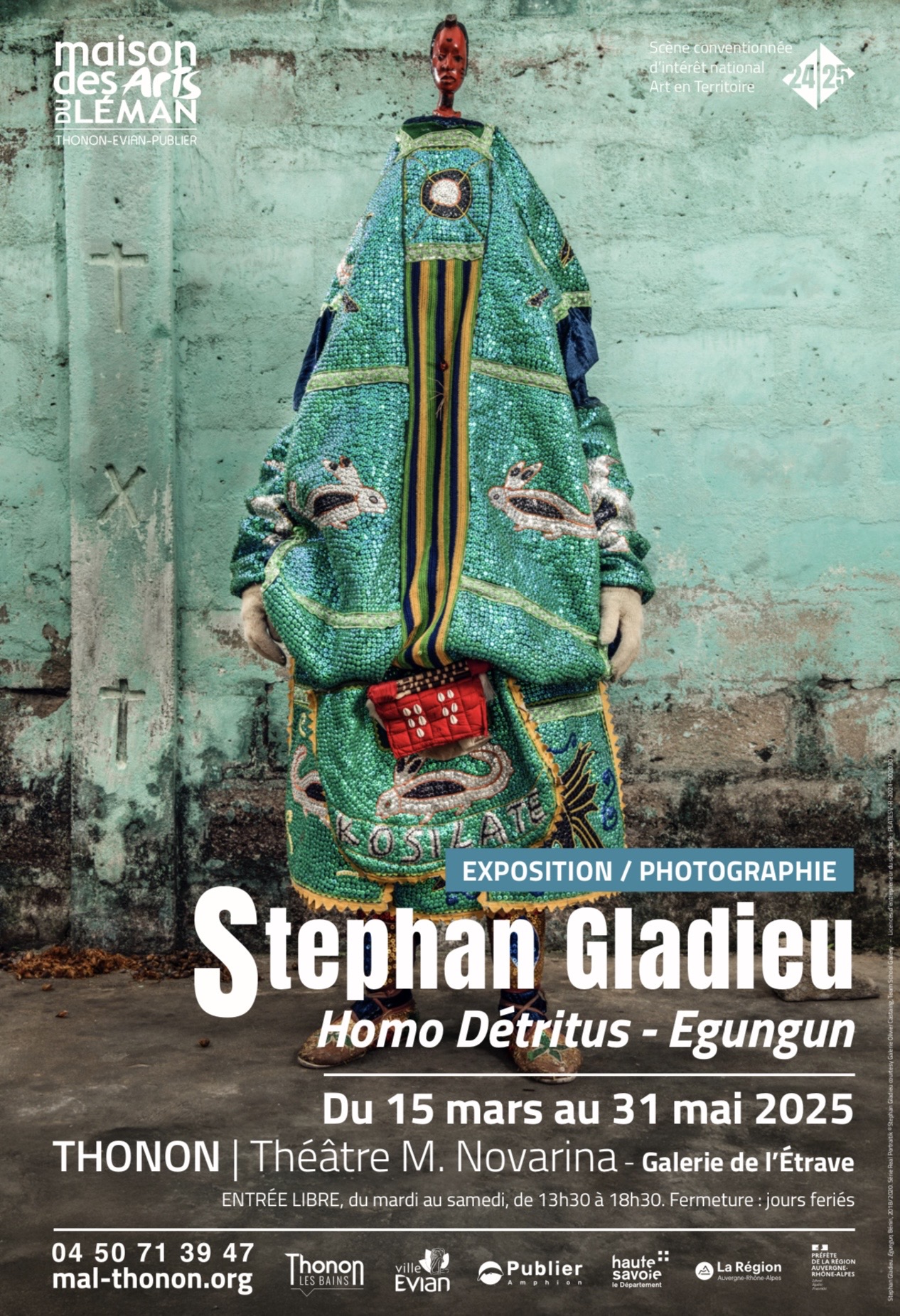
La Maison des Arts du Léman expose du 15 mars 2025 au 31 mai 2025 les série "Homo détritus" et "Egungun".
From March 15, 2025, to May 31, 2025, the Maison des Arts du Léman will exhibit the series “Homo détritus” and “Egungun.”
23.04.2023
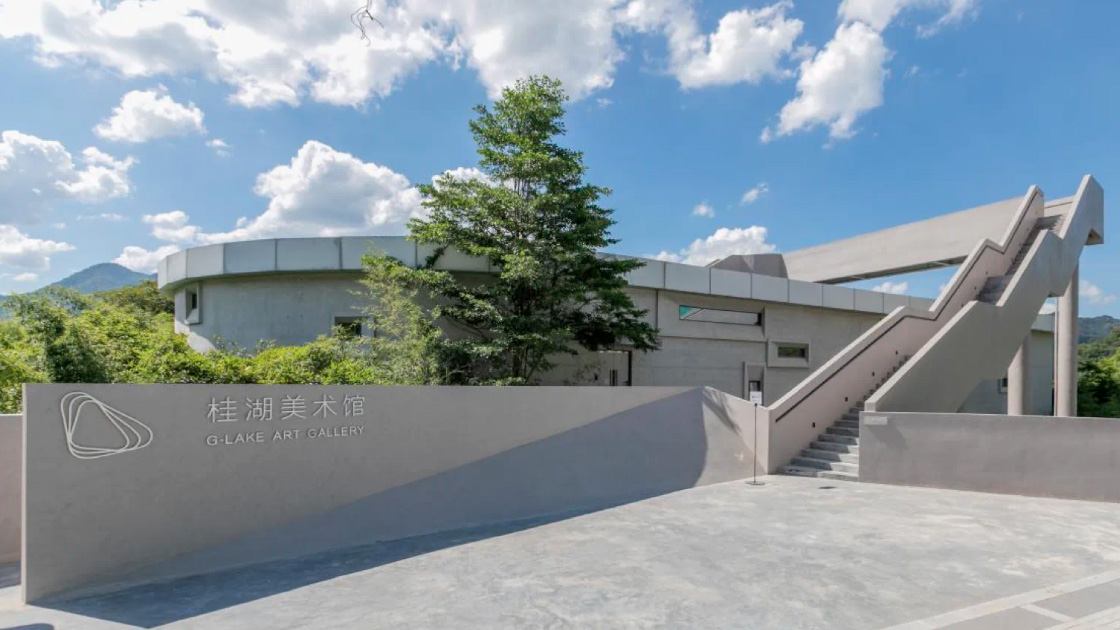
Ce très beau Musée de la Photographie à Fuzhou propose pour la première fois en Chine ma série Homo détritus. Tout d'abord censurée, elle a finalement trouvé sa place pour sensibiliser les Chinois aux problématiques environnementales et écologiques.
This beautiful Museum of Photography in Fuzhou is presenting my Homo détritus series for the first time in China. Initially censored, it has finally found its place in raising Chinese awareness of environmental and ecological issues.
31.03.2023
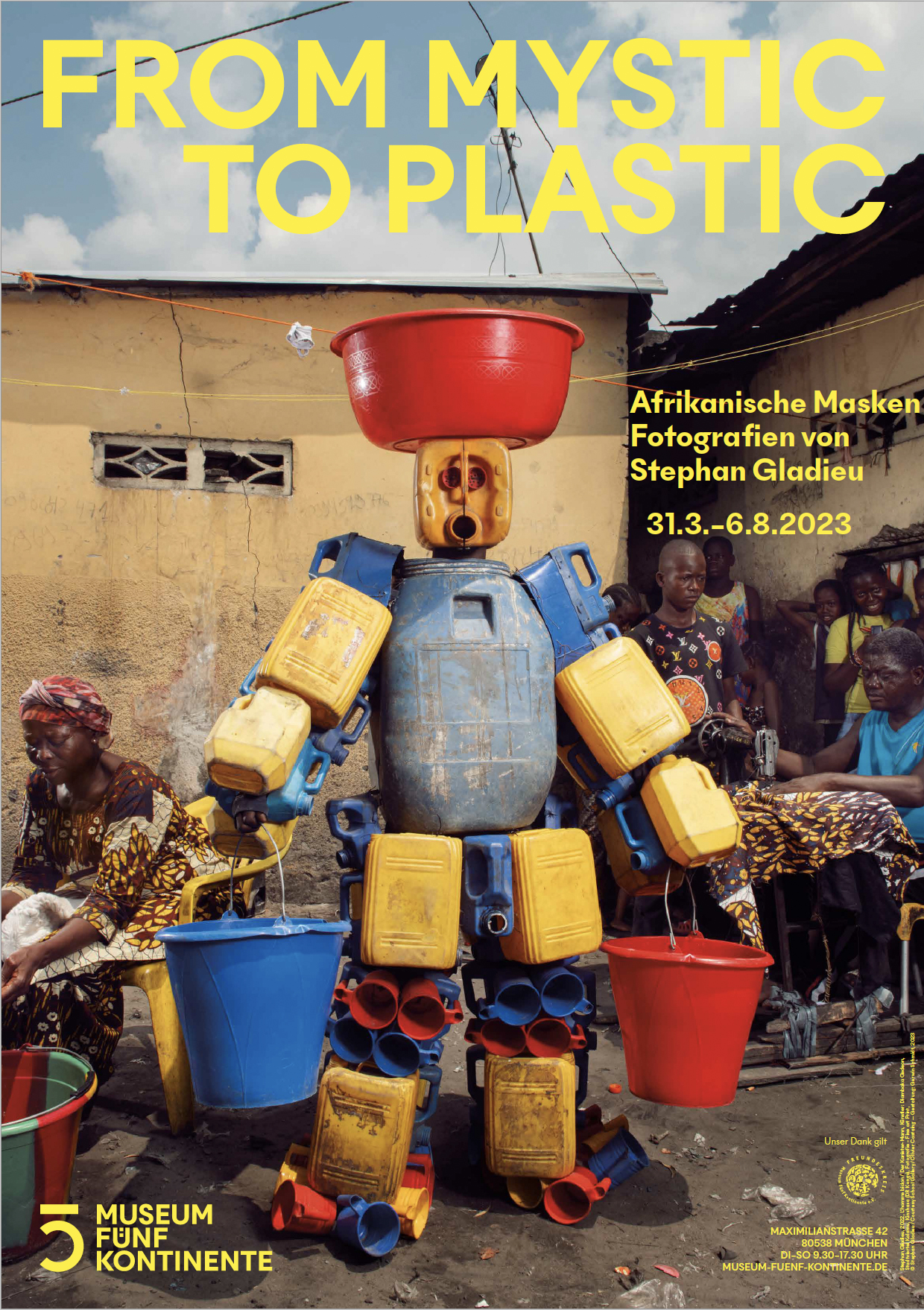
Nouvelle exposition du 31 mars au 26 aout 2023.
Les deux séries que nous vous présentons dans cette expositionnsous le thème "Du mystique au plastique" ont été réalisées de manière concomitante. S’appuyant sur ce cadre temporel, il nourrit un dialogue transgénérationnel entre le masque traditionnel africain de la société secrète vaudou des Egungun au Bénin et les créations contemporaines du collectif « Ndaku Ya la vie est belle » de Kinshasa en République Démocratique du Congo.
En entamant sa collaboration avec le collectif « Ndaku Ya la vie est belle » de Kinshasa, Stéphan Gladieu a été saisi par la cohérence entre le masque traditionnel des Egungu du Bénin et sa renaissance contemporaine formée de détritus à Kinshasa. En associant ces deux séries, il établit un lien de cause à effet plus que symbolique entre la disparition progressive du masque africain traditionnel et l'apparition du plastique et des déchets envoyés par les occidentaux en Afrique.
Le Bénin est le berceau historique du vaudou. Apparu au XVIIe siècle, le culte vaudou s’est diffusé dans certaines régions du Bénin, du Nigeria et du Togo. La traite des esclaves l’a ensuite répandu dans le Nouveau Monde, les esclaves emportant à bord des navires négriers leur religion, remaniant leur culte plus tard en candomblé brésilien, santeria cubaine et vaudou haïtien. D’abord diabolisée par les voyageurs, combattue par les missionnaires chrétiens, interdite par les colons, la religion vaudou fut stigmatisée par le régime béninois marxiste dans les années 1970.
Mystérieux et insondable pour les non-initiés, qui l’associe volontiers au satanisme, le culte vaudou imprègne encore puissamment le quotidien des Béninois qui le redoutent autant qu’ils le respectent. Bien plus qu’une religion, le vaudou est une culture authentique et complète, mêlant traditions orales, rites et danses en musique, philosophie, justice et médecine traditionnelle. Au cœur de cette croyance, la société secrète vaudou des Egungun relie les mondes visible et invisible par un dialogue mystique.
À l’origine, le masque traditionnel africain était façonné à partir de matières naturelles, raphia, écorces, bois, plumes, feuilles, autant de vecteurs symboliques des puissants esprits de la forêt. Aujourd’hui, l’apparition de monceaux de détritus en Afrique, spectres hantant les quartiers pauvres, offre l’opportunité au collectif de Kinshasa de dénoncer avec poésie, humour et résilience, le comportement cynique avec lequel les pays riches et anciens colons, envoient quantité de leurs déchets dans des pays qui n’ont déjà pas la capacité de traiter les leurs. Leurs masques-costumes sont un cri contre ce néocolonialisme économique, fait d’iniquité commerciale et de surexploitation des ressources naturelles, de la République Démocratique du Congo en particulier et du continent africain en général.
Plus largement, et bien au-delà du continent africain, "Du mystique au plastique" raconte l’abandon des modes de vie traditionnels et spirituels, en prise avec la nature, au profit de sociétés régies par un ordre matérialiste et artificiel, tendues vers un progrès technologique prétendument bénéfique à l’humanité.
New exhibition from March 31 to August 26, 2023.
The two series we present in this exhibition under the theme "From Mystic to Plastic" were created simultaneously. Based on this timeline, he nurtures a transgenerational dialogue between the traditional African mask of the secret Voodoo society of Egungun in Benin and the contemporary creations of the "Ndaku Ya la vie est belle" collective in Kinshasa, Democratic Republic of Congo.
In beginning his collaboration with the "Ndaku Ya la vie est belle" collective in Kinshasa, Stéphan Gladieu was struck by the coherence between the traditional Egungu mask from Benin and its contemporary resurgence formed of debris in Kinshasa. By combining these two series, he establishes a more than symbolic cause-and-effect link between the progressive disappearance of the traditional African mask and the appearance of plastic and waste sent by Westerners to Africa.
Benin is the historical birthplace of Voodoo. Emerging in the 17th century, the Voodoo cult spread to certain regions of Benin, Nigeria, and Togo. The slave trade later spread it to the New World, with slaves taking their religion aboard slave ships and later remolding their cult into Brazilian candomblé, Cuban santería, and Haitian Voodoo. Initially demonized by travelers, combated by Christian missionaries, banned by colonists, and stigmatized by the Marxist Beninese regime in the 1970s, Voodoo remains a mysterious and unfathomable religion for the uninitiated, often associated with Satanism.
Mysterious and unfathomable for the uninitiated, who associate it with Satanism, Voodoo still powerfully permeates the daily lives of the Beninese, who fear and respect it equally. More than just a religion, Voodoo is an authentic and complete culture, blending oral traditions, rituals and musical dances, philosophy, justice, and traditional medicine. At the heart of this belief, the secret Voodoo society of Egungun connects the visible and invisible worlds through mystical dialogue.
Originally, the traditional African mask was crafted from natural materials such as raphia, bark, wood, feathers, leaves, all vectors of powerful forest spirits. Today, the appearance of piles of debris in Africa, haunting the poor neighborhoods, offers the Kinshasa collective the opportunity to denounce with poetry, humor, and resilience the cynical behavior with which rich and former colonial countries send their waste to countries that already cannot handle their own. Their mask-costumes are a cry against this economic neocolonialism, made up of commercial inequity and over-exploitation of natural resources, in the Democratic Republic of Congo in particular and the African continent in general.
More broadly, and well beyond the African continent, "From Mystic to Plastic" tells the story of the abandonment of traditional and spiritual ways of life in harmony with nature, in favor of societies ruled by a materialistic and artificial order, driven by a technological progress claimed to be beneficial to humanity.
29.01.2023
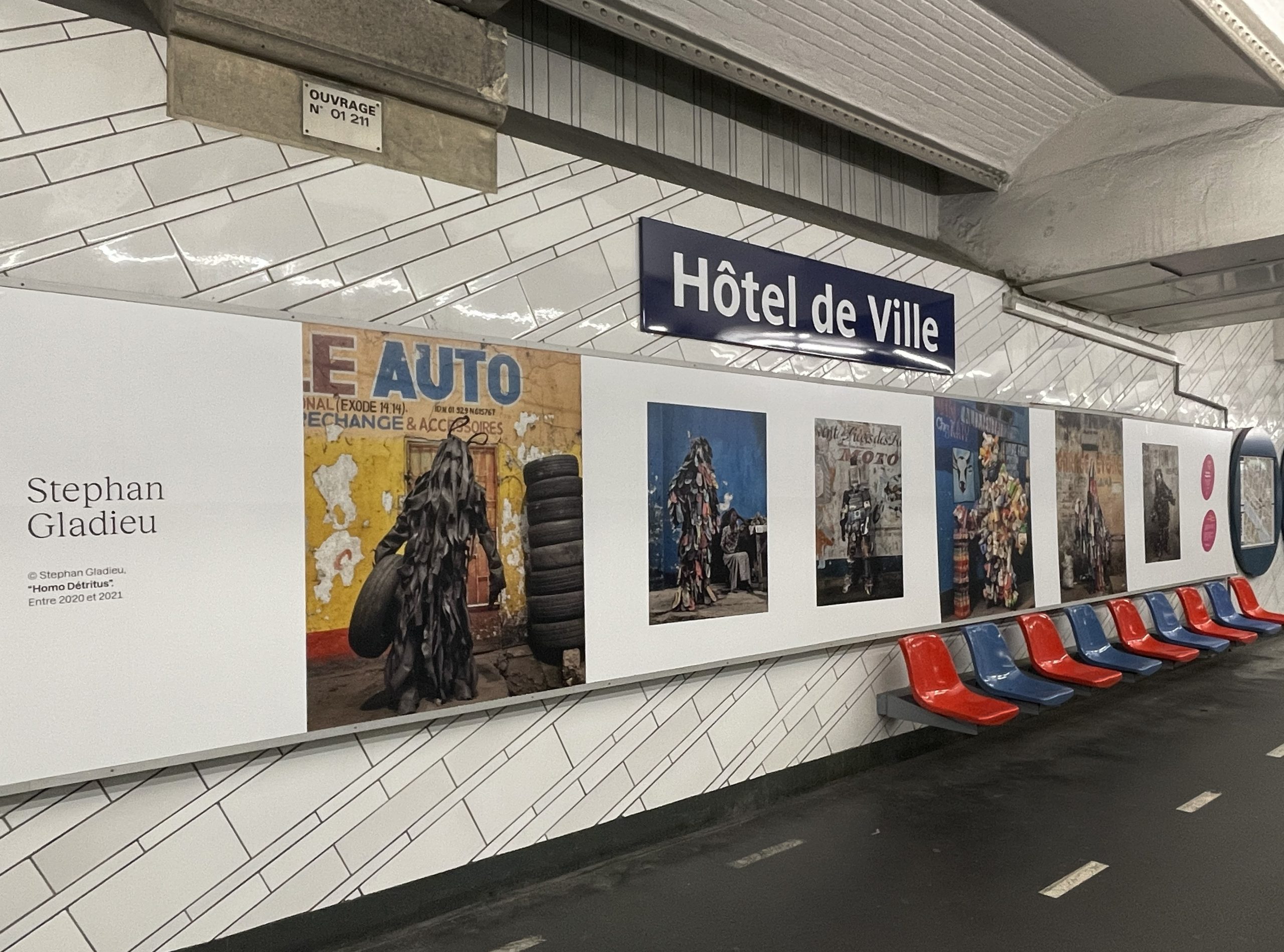
Une série de portraits à la rencontre de Ndaku ya la vie est belle, un collectif d'artistes congolais qui réutilisent les déchets pour revisiter les vêtements traditionnels et dénoncer la pollution industrielle.
A series of portraits to meet Ndaku ya la vie est belle, a collective of Congolese artists who reuse waste to revisit traditional clothes and denounce industrial pollution.
28.01.2023
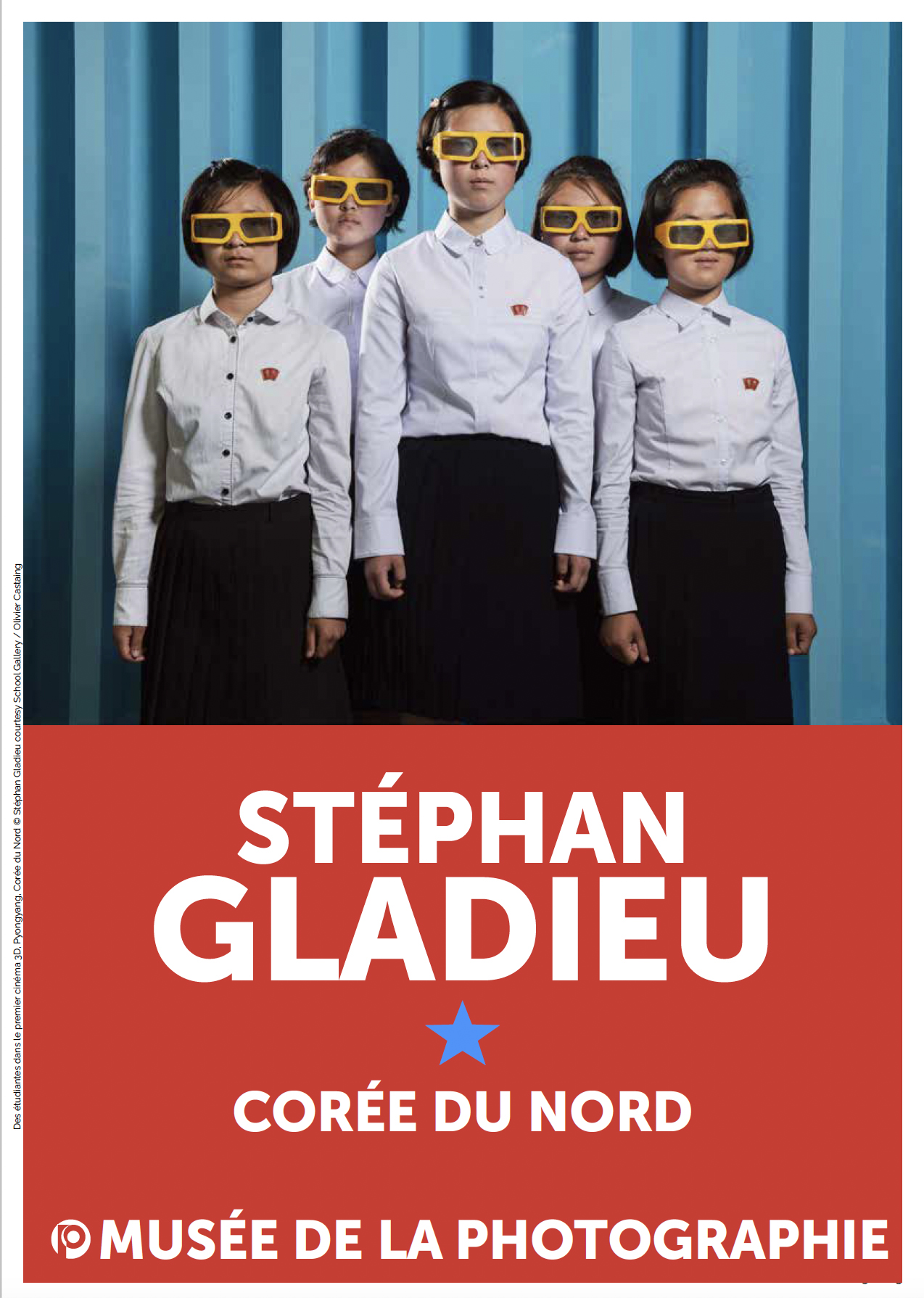
La série Corée du Nord est construite sur la répétition du 1, l'individu n'étant qu'une composante indissociable de la réalité collective. Ma démarche fait écho au régime dynastique et dictatorial qui, dans un contexte de tension permanente, a fait le choix d'un collectivisme qui rend son peuple invisible. Encadré et accompagné pas à pas tout au long de mes séjours en Corée du Nord, j'ai inventé un espace de liberté dans le cadre qui m'était imposé.
Pour capter l'identité de ce peuple et saisir le hors-champ de la doctrine officielle, j'ai choisi le portrait, souvent en pied, invitant à la pose frontale et au regard direct. En abordant ainsi les codes de l'image de propagande, j'ai rendu ma démarche, sinon familière, du moins compréhensible par les Nord-Coréens. Un pari dans un pays où l'individu n'existe pas et où le singulier n'a pas de réalité dans cette société où tout est pluriel, collectif et communautaire.
The North Korea series is built on the repetition of 1, the individual being only an inseparable component of the collective reality. My approach echoes the dynastic and dictatorial regime that, in a context of permanent tension, has chosen collectivism that makes its people invisible. Framed and accompanied step by step throughout my stays in North Korea, I invented a space of freedom within the framework imposed on me.
To capture the identity of this people and capture the off-screen of the official doctrine, I chose the portrait, often full-length, inviting frontal posing and direct gaze. By approaching the codes of propaganda image in this way, I made my approach, if not familiar, at least understandable by North Koreans. A gamble in a country where the individual does not exist and where the singular has no reality in this society where everything is plural, collective and communal.
08.01.2023
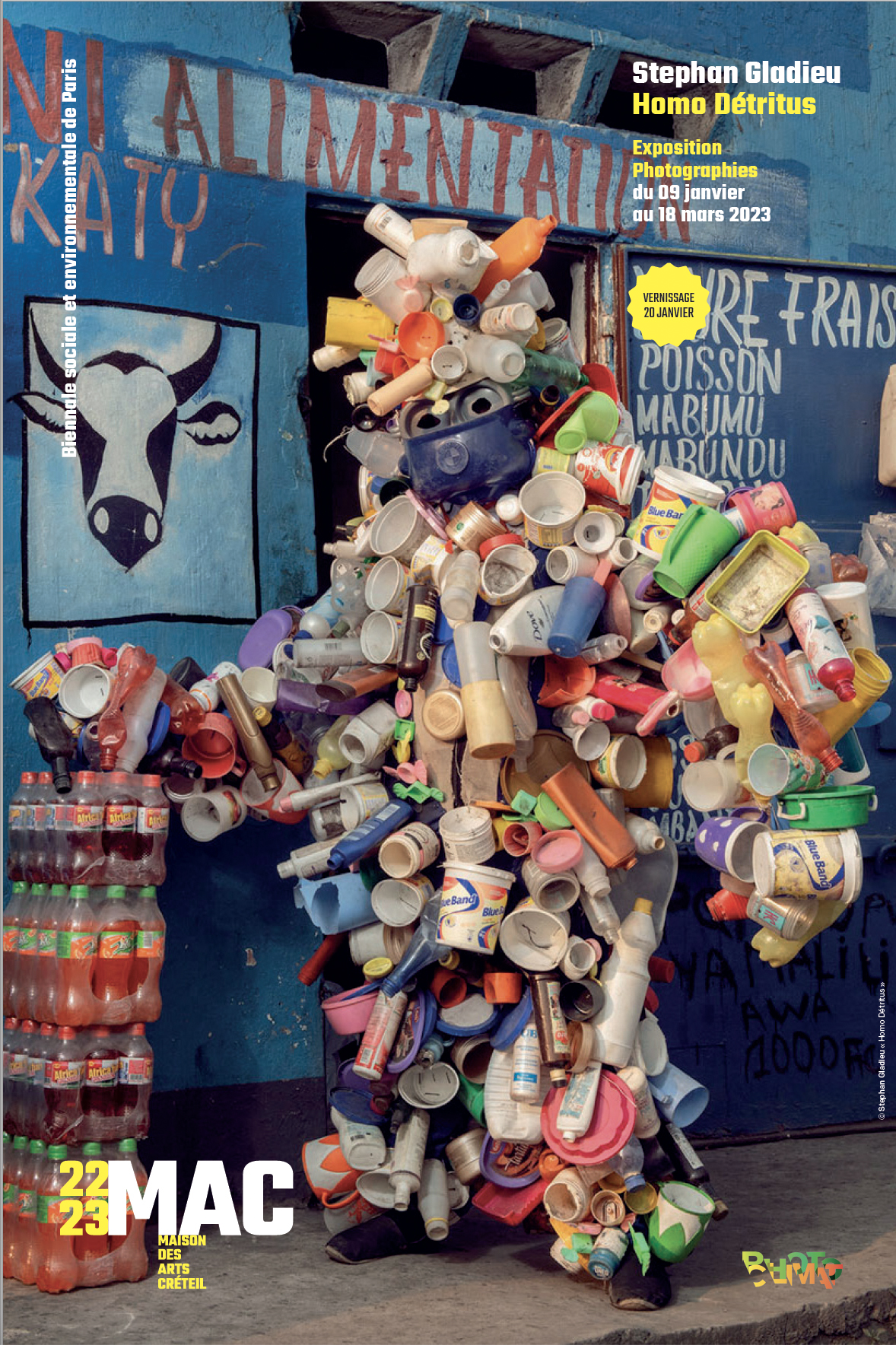
Merci à la magnifique équipe de la MAC de Créteil et celle de Photo Climat qui ont choisit d'exposer ma série "Homo détritus" du 9 janvier au 18 mars 2023.
Thanks to the wonderful team at MAC Créteil and Photo Climat who chose to exhibit my "Homo détritus" series from January 9, to March 18, 2023.
16.09.2022
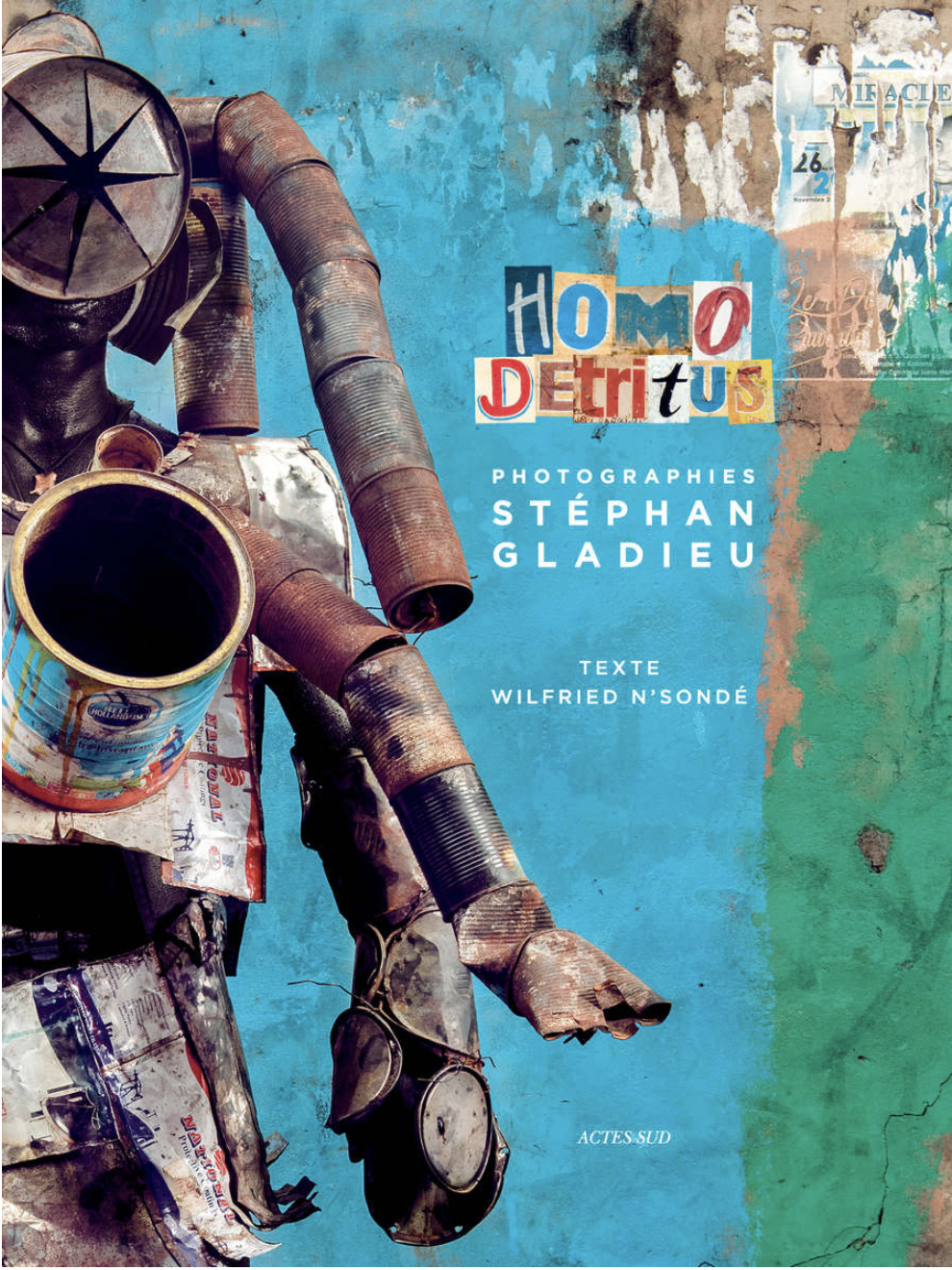
Une série de portraits à la rencontre de Ndaku ya la vie est belle, un collectif d'artistes congolais qui réutilisent les déchets pour revisiter les vêtements traditionnels et dénoncer la pollution industrielle.
Septembre 2022
Monographie
Actes Sud
A series of portraits to meet Ndaku ya la vie est belle, a collective of Congolese artists who reuse waste to revisit traditional clothes and denounce industrial pollution.
September 2022
Monographphoto book
Actes Sud
16.06.2022
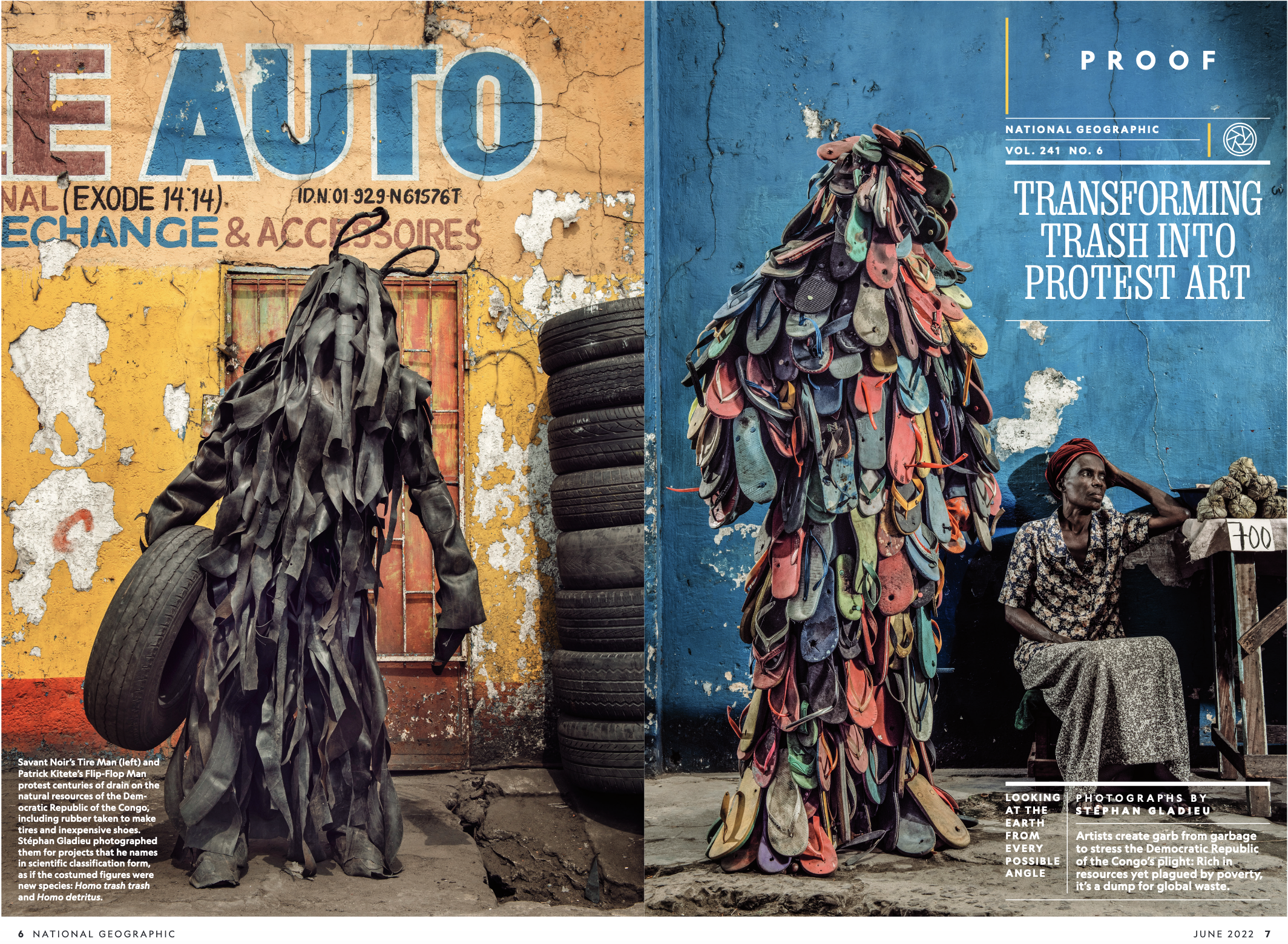
Magazine National Geographic - Proof
Ces artistes transforment les ordures en vêtements pour prendre position
En République démocratique du Congo, les créations d'artistes protestent contre la situation critique du pays en tant que dépotoir des déchets mondiaux.
National Geographic Magazine - Proof
These artists transform garbage into garb to take a stand
In the Democratic Republic of the Congo, artists’ creations protest the country’s plight as a dump for global waste.

02.06.2022
Solo Show à la galerie Joshua Tree d'art contemporain du 21 may 2022 au 28 aout 2022.
Artco Gallery et JT GOCA exposent Corée du Nord, Homo detritus et ma dernière série Egungun réalisée au Bénin.
Voir l'interview.
Solo Show at Joshua Tree Gallery of Contemporary Art from May 21, 2022 to August 28, 2022.
Artco Gallery and JT GOCA are exhibiting North Korea, Homo detritus and my latest series Egungun made in Benin.
See the interview.

02.06.2021
Exposition autour du Stade de France du 25 mai au 30 novembre 2021
Au sein de la Métropole du Grand Paris, Plaine Commune rassemble 9 villes de Seine-Saint-Denis : Aubervilliers, Épinay-sur-Seine, L’Île-Saint-Denis, La Courneuve, Pierrefitte-sur-Seine, Saint-Denis, Saint-Ouen-sur-Seine, Stains et Villetaneuse. Situé aux portes de Paris, entre La Défense et Roissy, l’Établissement public territorial Plaine Commune est marqué par la jeunesse de sa population et une très grande diversité qui lui offre une richesse artistique, culturelle et patrimoniale forte.
C’est un territoire-monde en soit qui rassemble plus de 130 nationalités, dont la diversité culturelle est ici mise à l’honneur. Plaine Commune m'a donné carte blanche pour que je pose mon regard sur les habitants de ses 9 villes et donne à voir cette diversité qui fait la singularité de son territoire.
Les 40 photos originales, réalisées en grand format jalonneront le périmètre du Stade de France pendant cinq mois, au moment où la programmation sportive et culturelle du Stade est à l’arrêt pour donner le signe fort de notre soutien à la culture !
Exhibition around the Stade de France from 25 May to 30 November 2021
Within the Greater Paris Metropolis, Plaine Commune brings together 9 towns in Seine-Saint-Denis: Aubervilliers, Épinay-sur-Seine, L'Île-Saint-Denis, La Courneuve, Pierrefitte-sur-Seine, Saint-Denis, Saint-Ouen-sur-Seine, Stains and Villetaneuse. Located at the gateway to Paris, between La Défense and Roissy, the Plaine Commune public territorial entity is marked by the youth of its population and a very great diversity that offers a strong artistic, cultural and heritage wealth.
It is a world territory in itself that brings together more than 130 nationalities, whose cultural diversity is honoured here. Plaine Commune gave me carte blanche to look at the inhabitants of its 9 cities and to show the diversity that makes its territory so unique.
The 40 original, large-format photos will be displayed around the perimeter of the Stade de France for five months, at a time when the stadium's sports and cultural programme is at a standstill, to give a strong sign of our support for culture!
02.06.2021
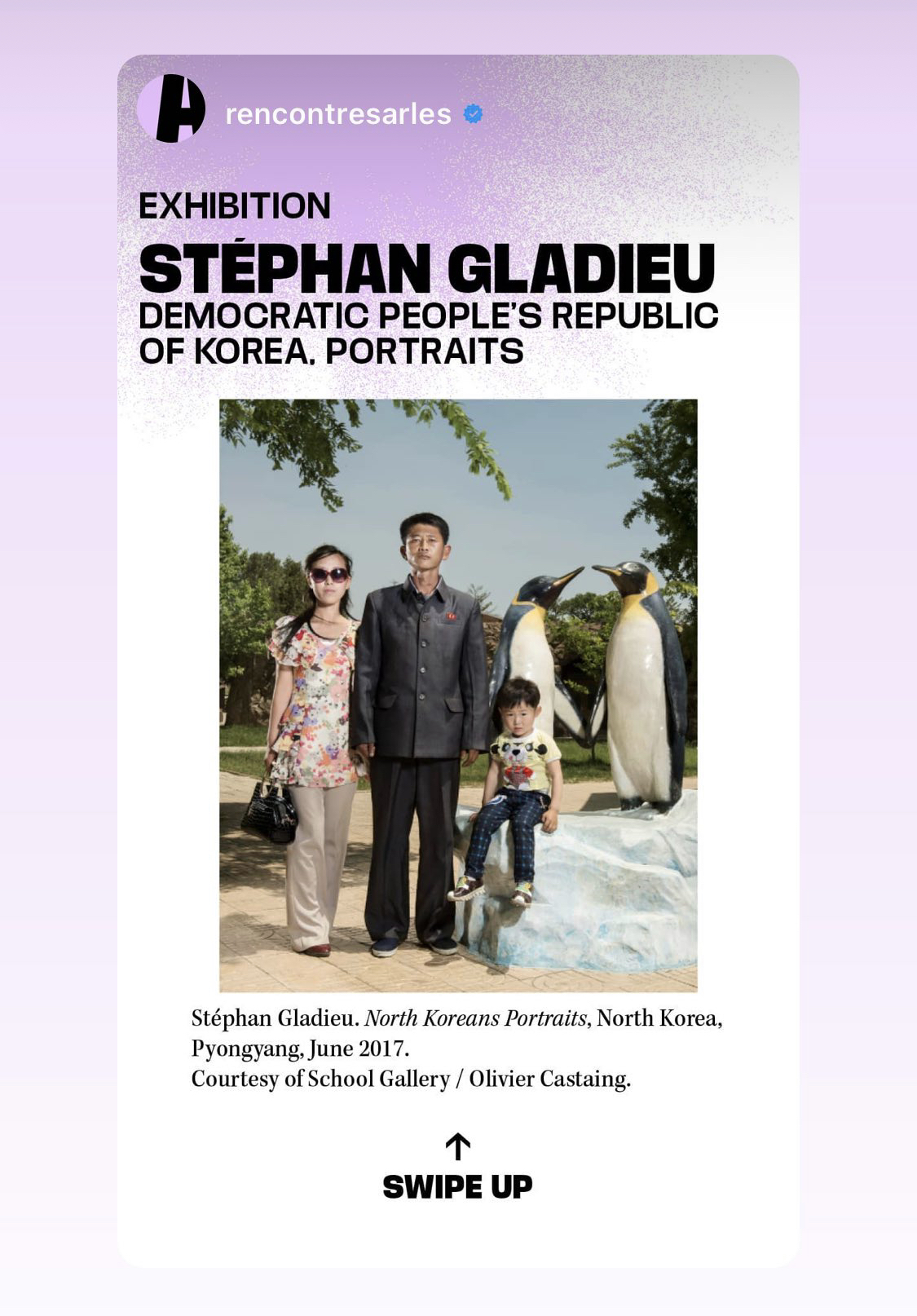
Ma série "Corée du Nord" est finalement à l'affiche des Rencontres d'Arles 2021. Elle sera exposée à l'extérieur en grand format au Jardin d'été du 4 juillet au 26 septembre.Je vous donne rendez-vous lors de la semaine professionnelle du 4 au 11 juillet.
My series "North Korea" is finally on display at the Rencontres d'Arles 2021. It will be exhibited outdoors in large format at the Jardin d'été from July 4 to September 26. I look forward to seeing you during the professional week from July 4 to 11.
13.03.2020
12.03.2020
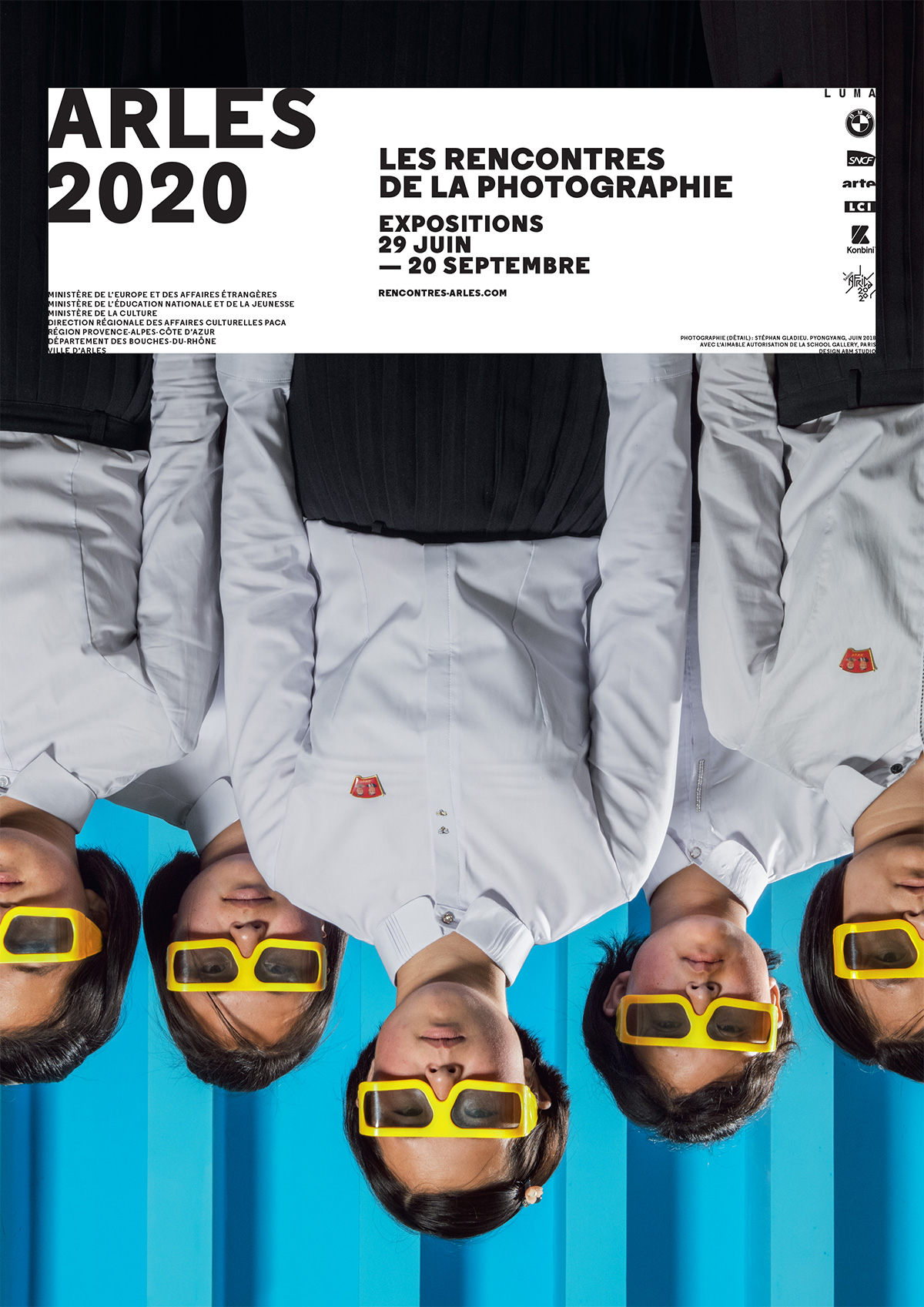
Ma dernière série "Corée du Nord" est à l'affiche des Rencontres d'Arles 2020 ou elle sera bientôt exposée au 1 er étage de la Chapelle du Méjan du 29 juin au 20 septembre.Je vous donne rendez-vous lors de la semaine professionnelle du 29 juin au 5 juillet. Je vous donne rendez-vous lors de la semaine professionnelle du 29 juin au 5 juillet.
My latest series "North Korea" is on display at the Rencontres d'Arles 2020 where it will soon be exhibited on the first floor of the Chapelle du Méjan from June 29th to September 20th. I look forward to seeing you during the professional week from June 29th to July 5th. I look forward to seeing you during the professional week from June 29th to July 5th.
10.11.2018
10.11.2018
04.11.2018
Olivier Castaing dévoile pour la première fois mon travail à Paris photo.
Venez découvrir en avant première une installation inédite de ma dernière série, Corée du Nord ainsi que la série consacrée aux Hereros de Namibie.
Du 7 au 11 novembre 2018 au Grand Palais.
Stand D6
Olivier Castaing unveil for the first time my work at PARIS PHOTO 2018.
Come and discover the Hereros collection from Namibia and a preview of my last serie, "North Korean" collection.
In Paris at "Le Grand Palais"
Stand D6
From the november 7th to november 11Th.
08.10.2018
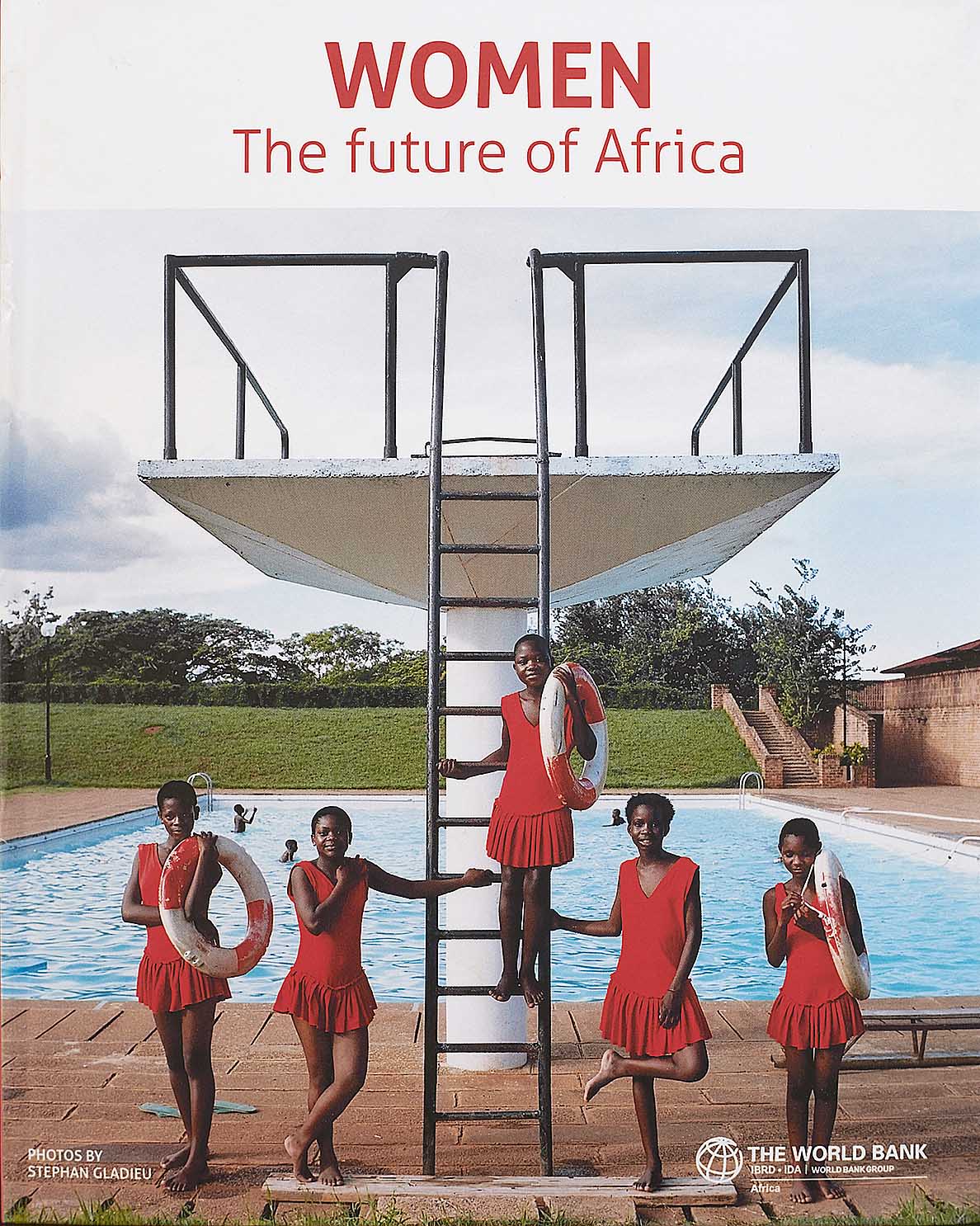
Les femmes sont l’un des moteurs de la croissance économique de l’Afrique. Comme le montrent ces photos et les textes qui les accompagnent, leur
réussite pro te à toute la collectivité. Quand on donne aux femmes les moyens d’être autonomes, elles sont en mesure d’améliorer leur quotidien et la prospérité de leur pays non seulement parce que leur productivité et leurs revenus augmentent mais aussi parce qu’elles peuvent améliorer les perspectives des générations à venir. Une femme instruite contrôlera mieux le budget du ménage, aura une famille moins nombreuse et investira davantage dans l’éducation et la santé de ses enfants.
Ces vingt dernières années, les pays d’Afrique ont fortement réduit les inégalités entre les hommes et les femmes, en particulier dans les secteurs de l’éducation et la santé. Cependant, qu’il s’agisse de leur accès à l’emploi ou de leur capacité à faire entendre leur voix, les femmes sont encore confrontées à des obstacles importants.
Women play a critical role in Africa’s economic growth. As these photos and their accompanying stories show, when women succeed, their com- munities succeed. Empowered women are not only better able to improve their own lives and the immediate prosperity of their countries, but they are also able to improve the lives of future generations – when women are educated and have more control over household income, they have fewer children and so can invest more in the education and health care of each child, preventing the spread of poverty from one generation to the next.
Over the past two decades, countries in Africa have made signi cant progress in raising living standards and closing gaps between men and women, particularly in education and health. However, critical gaps remain in the areas of economic opportunity and the voice and agency of women and girls.
04.09.2018
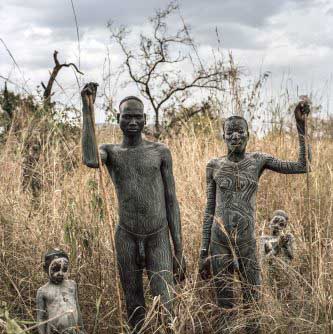
À l’occasion du parcours des mondes, la galerie Alexandre Biaggi propose une mise en scène autour des masques africains de la galerie Lucas Ratton, d’une photo de Stéphane Gladieu de la School Gallery, et d’une œuvre de Matthieu Dagorn. L’atmosphère ainsi créée évoque l’appartement d’un collectionneur éclectique et passionné par les liens entre art premier et art contemporain.
Vernissage le 11 septembre 2018 de 17h00 à 21h00
Alexandre Biaggi 14, rue de Seine 75006 Paris www.alexandrebiaggi.com
The gallery Alexandre Biaggi expose the Surma collection
Opening the 11 septembre 2018 de 17h00 à 21h00
Alexandre Biaggi 14, rue de Seine 75006 Paris www.alexandrebiaggi.com
30.05.2018
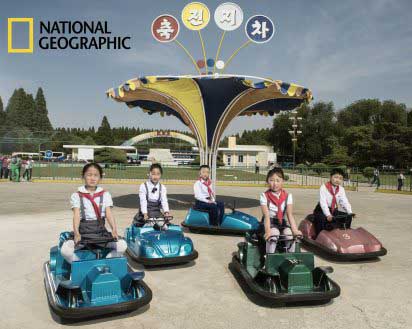
Voir la publication - Comment réconcilier ma vision, ma projection d’Occidental et la perception que mes hôtes auraient de cette proposition. Pour chaque personne arrêtée au hasard dans les lieux qu’ils avaient choisi de me montrer, quel serait le plus petit dénominateur commun qui leur
permettrait de m’autoriser à faire son portrait, sans qu’ils perdent la face ? Quels étaient les codes, les situations, les profils qu’ils considéreraient présentables à mon objectif.
Il était essentiel qu’ils trouvent dans mon travail des référents compréhensibles, acceptables. Nos mondes, nos cultures, nos mentalités sont si différents, que nous comprendre nous a souvent demandé d’intenses efforts.
J’ai choisi le portrait-miroir, qui saisit le sujet dans la frontalité la plus crue, comme un cadre anthropologique de référence. Je souhaitais marcher modestement dans les pas du scrupuleux August Sander qui mélange photographie documentaire et pratique artistique. Dans ses portraits, la lumière est constante, la vue est frontale, le regard direct, le cadre varie peu. Le modèle s'installe dans son portrait, soigne son apparence comme il le souhaite. Le photographe ne cherche pas à le surprendre. La légende ne nomme pas, elle indique un statut et guide le regard en précisant comment il faut voir l'image.
Website -How can I reconcile my vision and my Western-oriented perspective with the viewpoints of my hosts? Encountering random passers-by at the sites where I am allowed to visit, how will I connect and gain tacit permission to shoot their portraits without compromising them? What are the codes, situations, profiles they will consider presentable to my lens?
They would have to find in my work comprehensible, acceptable points of reference. Given cultures and mentalities so different, it would often take intense effort to understand one another.
I chose the mirror-style portrait, shooting the subject from a straight-ahead angle, as if collecting data for an anthropological study. I hoped to humbly follow in the footsteps of the scrupulous August Sander, who managed to combine documentary photography and aesthetics. In his portraits, the light is flat, the perspective straight-on, the gaze direct; the frame hardly varies. The model occupies the portrait, grooms his or her appearance at will. The photographer does not try to surprise or impose. The caption says little, merely indicating status and guiding the gaze to the image.
20.02.2018
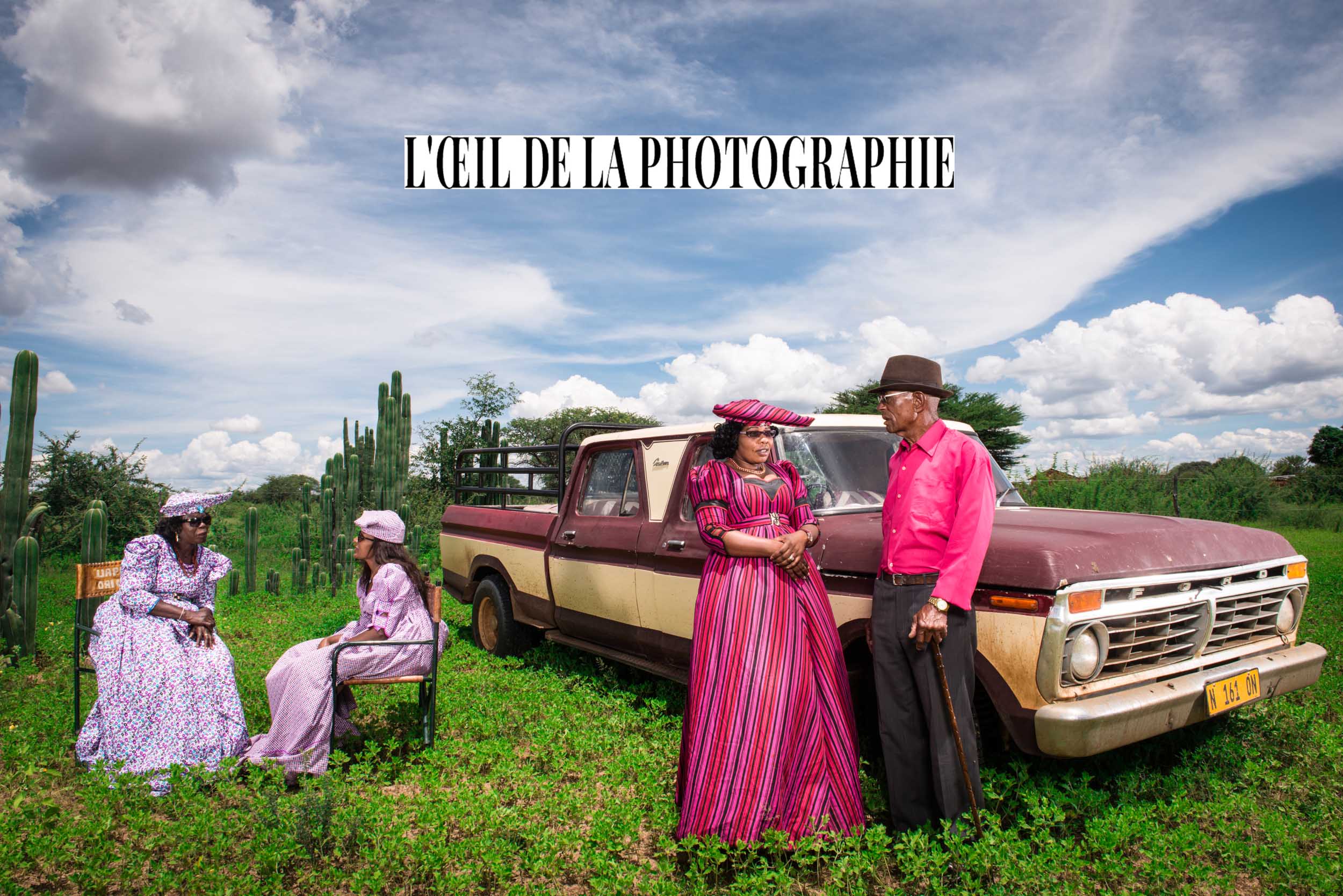
Herero, Realportraitik #1, School Gallery, Paris 2018
Stephan Gladieu, photographe français,
rejoint la Team School Gallery à l’occasion de
cette première exposition personnelle, en cette
année 2018, qui marque le 10ème anniversaire
de la galerie.
En 1904, Le Général Von Trotha se voit confier par le Kaiser Guillaume la mission d’écraser les rebelles Hereros et Namas qui freinent le processus de colonisation. Il s’attèlera à sa tâche avec zèle, décimant aussi bien les soldats que les femmes et les enfants. Entre 1904 et 1911, la population herero passe de 80 000 à 15 000 âmes et la population nama de 20 000 à 10 000. Certains vont périr au combat. D’autres seront poussés dans le désert du Kalahari pour y être achevés par la faim et la soif. Beaucoup seront déportés dans des camps de travail où ils mourront derrière les barbelés de maladie et de malnutrition. Démembrés, dépecés, parfois par leurs propres enfants, leurs corps seront ensuite envoyés en Allemagne pour y être étudiés par des anthropologues.
L’Allemagne n’a jamais versé de réparations aux namas et aux hereros. Ils forment aujourd’hui une minorité pauvre au sein de la jeune nation qu’est devenue la Namibie. Cependant, la page n’est pas tournée.
Herero, Realportraitik #1, School Gallery, Paris 2018
In 1904, General Von Trotha was assigned by Kaiser Wilhelm the task of crushing the Hereros and Namas rebels who were obstructing the colonization process. He responded with vehemence, slaughtering not only soldiers but women and children. Between 1904 and 1911, the Herero tribe lost 65,000 of its 80,000 members. Some were killed in battle. Others were forced into the Kalahari desert to perish of hunger and thirst. Many were deported to labor camps, where they succumbed to disease and malnutrition behind barbed wire. Dismembered, butchered, sometimes by their own children, their bodies were often sent to Germany to be studied by anthropologists.
Germany has never paid reparations to the Hereros, who today are an impoverished minority within the young nation of Namibia. However, the story does not end there.
30.10.2017
Hereros et Namas, mémoire d’un génocide
En 1904, Le Général Von Trotha se voit confier par le Kaiser Guillaume la mission d’écraser les rebelles Hereros et Namas qui freinent le processus de colonisation. Il s’attèlera à sa tâche avec zèle, décimant aussi bien les soldats que les femmes et les enfants. Entre 1904 et 1911, la population herero passe de 80 000 à 15 000 âmes et la population nama de 20 000 à 10 000. Certains vont périr au combat. D’autres seront poussés dans le désert du Kalahari pour y être achevés par la faim et la soif. Beaucoup seront déportés dans des camps de travail où ils mourront derrière les barbelés de maladie et de malnutrition. Démembrés, dépecés, parfois par leurs propres enfants, leurs corps seront ensuite envoyés en Allemagne pour y être étudiés par des anthropologues.
L’Allemagne n’a jamais versé de réparations aux namas et aux hereros. Ils forment aujourd’hui une minorité pauvre au sein de la jeune nation qu’est devenue la Namibie. Cependant, la page n’est pas
Hereros and Namas, A Genocide Remembered
In 1904, General Von Trotha was assigned by Kaiser Wilhelm the task of crushing the Hereros and Namas rebels who were obstructing the colonization process. He responded with vehemence, slaughtering not only soldiers but women and children. Between 1904 and 1911, the Herero tribe lost 65,000 of its 80,000 members, and the Nama population of 20,000 was cut in half. Some were killed in battle. Others were forced into the Kalahari desert to perish of hunger and thirst. Many were deported to labor camps, where they succumbed to disease and malnutrition behind barbed wire. Dismembered, butchered, sometimes by their own children, their bodies were often sent to Germany to be studied by anthropologists.
Germany has never paid reparations to the Namas or Hereros, who today are an impoverished minority within the young nation of Namibia. However, the story does not end there.